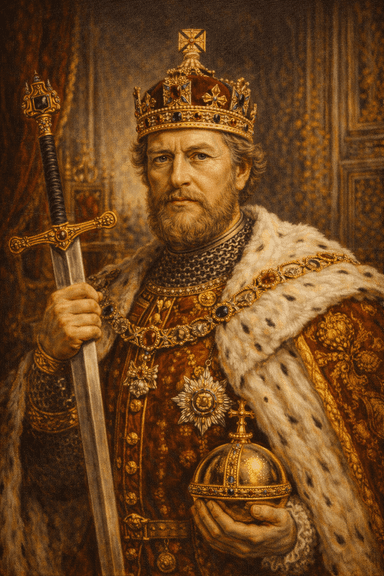
MONARCH 1
William I
1066–1087 · Norman
He invaded England with no legitimate claim, won a single battle, and spent the next twenty years convincing a conquered people that what had just happened was normal.
View profileLineage
Explore the full sequence of British monarchs in order, from the Norman conquest to the modern Windsor monarchy. Switch between a structured dynasty view and a scrollable timeline.
MONARCH 1
1066–1087 · Norman
He invaded England with no legitimate claim, won a single battle, and spent the next twenty years convincing a conquered people that what had just happened was normal.
View profile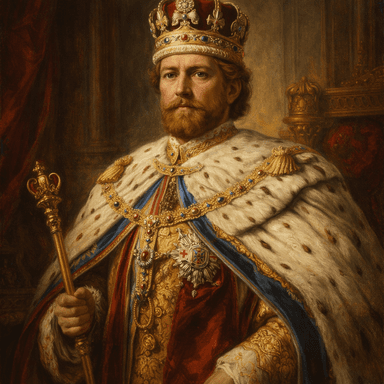
MONARCH 2
1087–1100 · Norman
He was found dead in the New Forest with an arrow through his chest — and whether it was an accident, a hunting party mishap, or something more deliberate has never been established.
View profile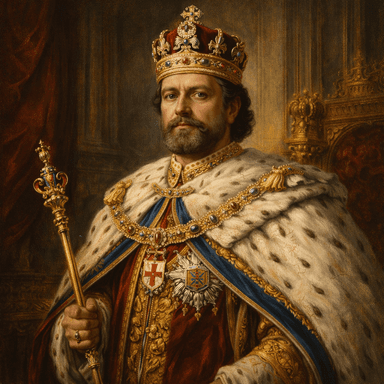
MONARCH 3
1100–1135 · Norman
He had more than twenty illegitimate children, lost his only legitimate son in a shipwreck, and spent the rest of his reign trying to solve a succession crisis that would outlast him.
View profile
MONARCH 4
1135–1154 · Blois
Stephen’s contested accession led to civil war, remembered as the Anarchy, before the succession passed to the future Henry II.
View profile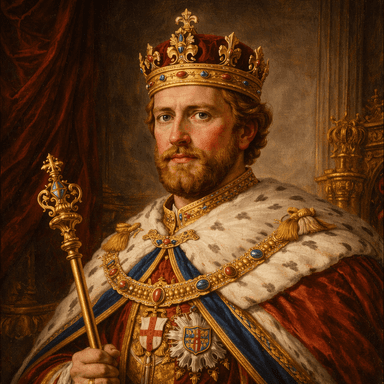
MONARCH 5
1154–1189 · Plantagenet
He was England's most capable medieval king — and one remark he made in anger led to the murder of his closest friend in a cathedral, a crisis from which he never fully recovered.
View profile
MONARCH 6
1189–1199 · Plantagenet
He spent less than six months of his ten-year reign actually in England — and is still celebrated as one of its greatest medieval kings.
View profile
MONARCH 7
1199–1216 · Plantagenet
He lost Normandy, lost the battle of Bouvines, and was forced to sign Magna Carta — and the document that defined his failure became the foundation of constitutional rights everywhere.
View profile
MONARCH 8
1216–1272 · Plantagenet
He reigned for fifty-six years and spent much of that time in conflict with his own barons — a struggle that produced the first English parliament, though that wasn't what anyone intended.
View profile
MONARCH 9
1272–1307 · Plantagenet
He was determined to bring the whole of Britain under English rule — and came close enough that Scotland has been pushing back ever since.
View profile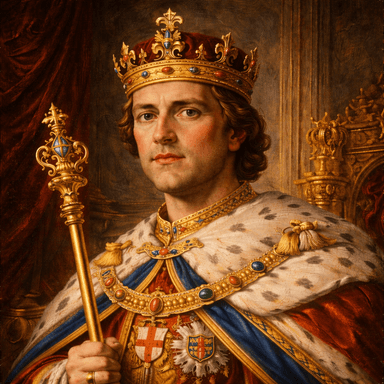
MONARCH 10
1307–1327 · Plantagenet
His father conquered Scotland and he lost it — at Bannockburn, against a force half the size of his own, in one of the most complete military reversals of the medieval era.
View profile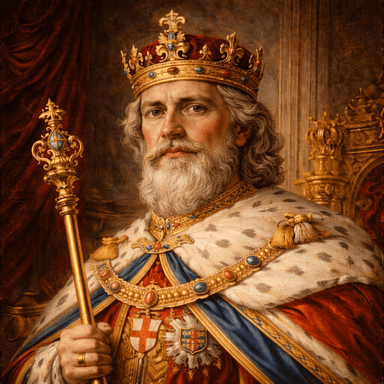
MONARCH 11
1327–1377 · Plantagenet
He started the Hundred Years' War over a claim to the French throne that even his own lawyers found unconvincing, and then made it look plausible by winning every battle for a decade.
View profile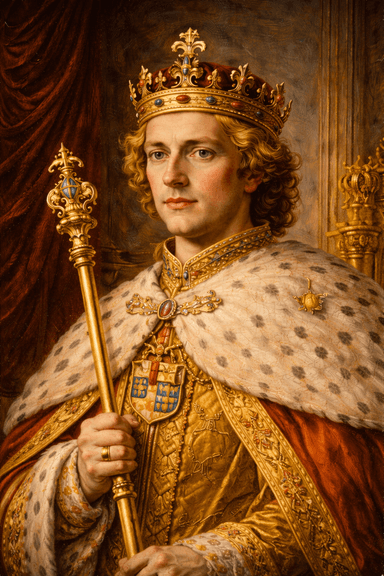
MONARCH 12
1377–1399 · Plantagenet
He crushed the Peasants' Revolt at fifteen and spent the next twenty years becoming exactly the kind of king that invited deposition.
View profile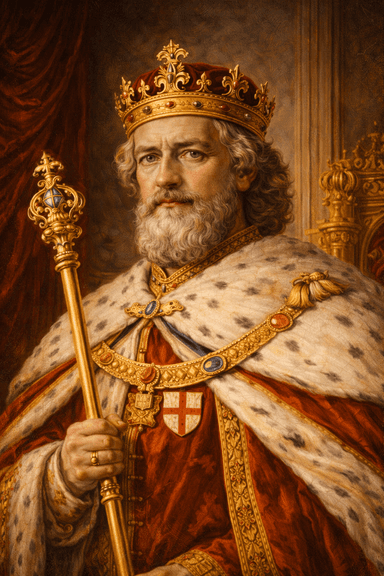
MONARCH 13
1399–1413 · Lancaster
He seized the crown from his cousin, spent the rest of his reign defending it against the consequences, and died before his son could show what he had really inherited.
View profile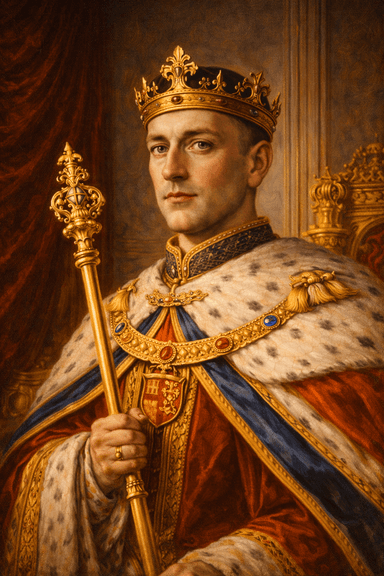
MONARCH 14
1413–1422 · Lancaster
He led a small, sick, exhausted army across northern France and destroyed a much larger force at Agincourt — a victory so unlikely that people have been trying to explain it ever since.
View profileMONARCH 15
1422–1461, 1470–1471 · Lancaster
Henry VI’s weak rule and mental illness helped drive the Wars of the Roses between Lancaster and York.
View profileMONARCH 16
1461–1470, 1471–1483 · York
Edward IV restored Yorkist power through battlefield success and firmer kingship after years of civil war.
View profileMONARCH 17
1483 · York
Edward V’s reign was brief and uncrowned; he is remembered as one of the Princes in the Tower.
View profileMONARCH 18
1483–1485 · York
Richard III’s short reign ended at Bosworth Field, where the Tudor era began.
View profileMONARCH 19
1485–1509 · Tudor
Henry VII founded the Tudor dynasty, stabilised the crown, and ended the Wars of the Roses.
View profile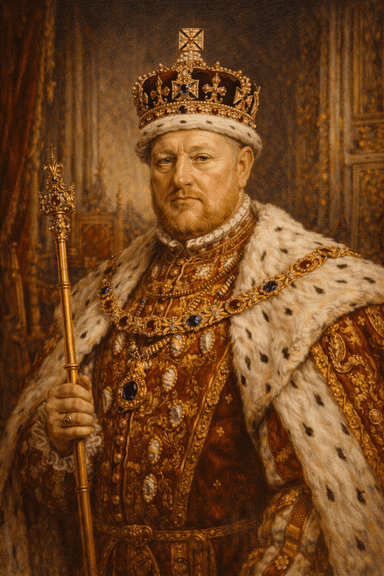
MONARCH 20
1509–1547 · Tudor
He wanted a divorce, couldn't get one through the usual channels, and ended up breaking with Rome and remaking England's relationship with Christianity to get what he wanted.
View profileMONARCH 21
1547–1553 · Tudor
Edward VI’s reign advanced Protestant reform, though he died before reaching adulthood.
View profileMONARCH 22
1553–1558 · Tudor
Mary I attempted to restore Catholicism and became known to later Protestant memory as ‘Bloody Mary’.
View profile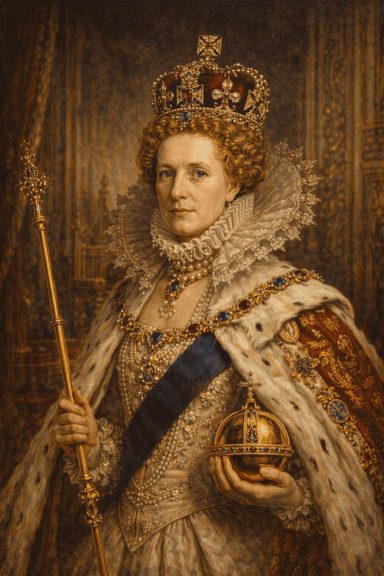
MONARCH 23
1558–1603 · Tudor
Every European power assumed a woman couldn't rule alone — and she governed England for forty-five years without a husband, surviving plots, rebellions, and the Spanish Armada.
View profileMONARCH 24
1603–1625 · Stuart
James VI of Scotland became James I of England, uniting the crowns and beginning the Stuart era in England.
View profileMONARCH 25
1625–1649 · Stuart
Charles I’s clashes with Parliament led to civil war, defeat, and his execution in 1649.
View profileMONARCH 26
1660–1685 · Stuart
After the Interregnum, Charles II restored the monarchy and presided over a politically agile Restoration court.
View profileMONARCH 27
1685–1688 · Stuart
James II’s Catholicism and centralising instincts helped provoke the Glorious Revolution.
View profileMONARCH 28
1689–1694 · Stuart / Orange
William and Mary ruled jointly after the Glorious Revolution, establishing a stronger constitutional balance between crown and Parliament.
View profileMONARCH 29
1694–1702 · Orange
After Mary’s death, William III continued alone, focusing heavily on European war and the balance of power.
View profileMONARCH 30
1702–1714 · Stuart
Anne became the first monarch of Great Britain after the 1707 union of England and Scotland.
View profileMONARCH 31
1714–1727 · Hanover
George I began the Hanoverian era and ruled in partnership with an increasingly powerful parliamentary system.
View profileMONARCH 32
1727–1760 · Hanover
George II was the last British monarch to lead troops in battle and reigned during Britain’s expanding imperial power.
View profileMONARCH 33
1760–1820 · Hanover
George III ruled through the American Revolution, the Napoleonic Wars, and major constitutional strain.
View profileMONARCH 34
1820–1830 · Hanover
George IV is remembered for extravagance, patronage of the arts, and the culture of the Regency period.
View profileMONARCH 35
1830–1837 · Hanover
William IV’s reign saw the Great Reform Act and a changing relationship between monarchy and Parliament.
View profileMONARCH 36
1837–1901 · Hanover / Saxe-Coburg and Gotha
Queen Victoria’s long reign became synonymous with industrial growth, empire, and the social tone of the Victorian age.
View profileMONARCH 37
1901–1910 · Saxe-Coburg and Gotha
Edward VII ushered in the Edwardian era and played a visible diplomatic role in pre-war Europe.
View profileMONARCH 38
1910–1936 · Windsor
George V guided the monarchy through the First World War and renamed the royal house Windsor.
View profileMONARCH 39
1936 · Windsor
Edward VIII abdicated in 1936, producing one of the most dramatic constitutional crises of the modern monarchy.
View profile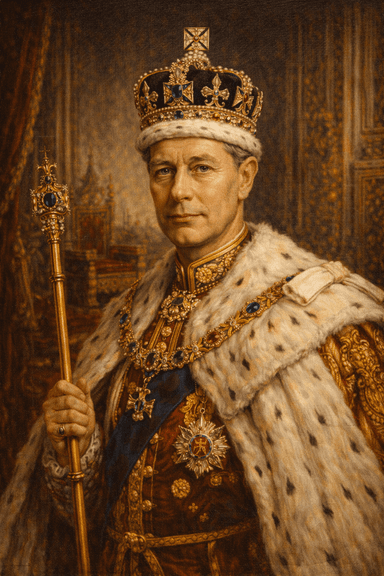
MONARCH 40
1936–1952 · Windsor
He never wanted to be king, had a stammer that made public speaking an ordeal, and became the defining symbol of his country's refusal to give in during its darkest years.
View profile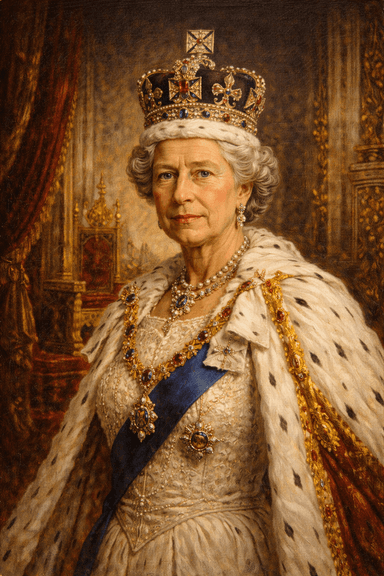
MONARCH 41
1952–2022 · Windsor
She became queen at twenty-five and reigned for seventy years — watching fourteen prime ministers come and go while the empire that shaped her childhood quietly disappeared.
View profile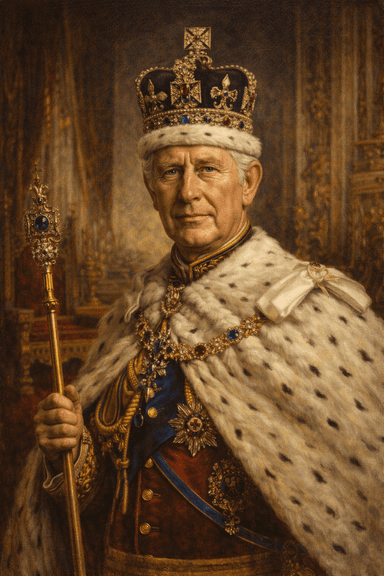
MONARCH 42
2022–present · Windsor
He waited longer to become king than almost anyone in British history — and arrived on the throne with decades of opinions about the world already fully formed.
View profileFormally, Queen Anne is usually treated as the first monarch of Great Britain after the 1707 union. For search and usability, this page begins with William I in 1066 because that is the sequence most readers expect.
The monarchy includes civil war, deposition, joint rule, and interrupted reigns. Those complexities are part of why a clear lineage page is useful.